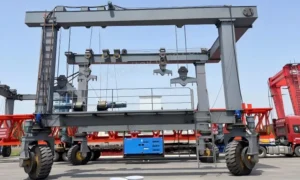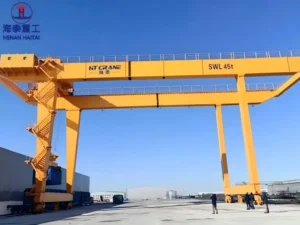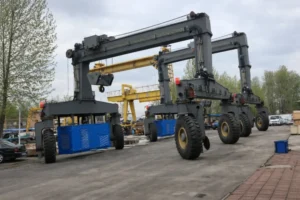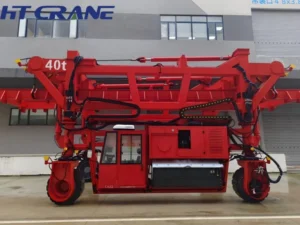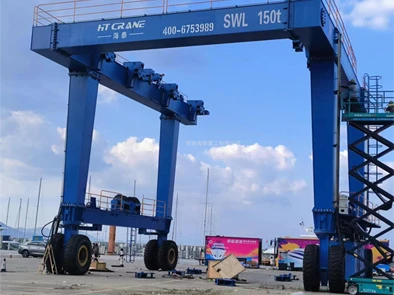

Argentina RTG crane market is best understood through Buenos Aires, where established container terminals already operate mixed fleets of rubber-tyred gantry cranes from international manufacturers. Official port data records RTGs across Terminals 1–3, Terminal 4 and Terminal 5, while a $143 million expansion at Dock Sud is adding capacity outside Puerto Buenos Aires.
This article reviews the existing fleet, replacement opportunities, technical requirements, and Haitai’s 2018 dual-hoist RTG export case for a steel factory in Argentina.
Buenos Aires RTG Fleet in Argentina: What the Existing Equipment Tells Us?
Argentina’s RTG crane market runs through Buenos Aires, where a mature container-handling system already operates rubber-tyred gantry cranes alongside rail-mounted gantry cranes, mobile quay cranes, and reach stackers.
That makes Argentina a different kind of market from one built mainly on new greenfield terminals — the stronger opportunity here is the combination of an existing equipment fleet, replacement cycles, terminal modernization, and additional capacity being added outside the flagship port.
Buenos Aires isn’t a single-equipment market. Official information from the Argentine government’s port authority lists RTG cranes across several terminals, and the mix of brands and vintages says as much about future demand as the raw crane count does: